Measuring Variation in a Provincial Model
Over the past several weeks, Amanda Parriag and I have been meeting with several HART Hubs across Ontario. For those less familiar, HART Hubs (Homelessness and Addiction Recovery Treatment Hubs) are a provincial initiative intended to provide integrated, treatment-focused services and supportive housing for people experiencing homelessness and substance use challenges.
The provincial reference material describes a broad menu of possible services, including primary and psychiatric care, addictions treatment, case management, supportive housing, employment supports, peer support, and systems navigation — all tailored to local needs.
In practice, the variation across hubs is significant.
Some hubs operate through complex governance models, where multiple community partners come together to provide outreach, transitional housing, and direct supports. Others are anchored in a single provider organization. And some sit in between.
Each reflects local context, infrastructure, and capacity — which is intentional. But they are not the same intervention.
Across all our conversations, one theme stood out: housing matters.
People are seeking support for addiction and mental health but housing stability — and the hope of something more permanent — is often what makes engagement possible.
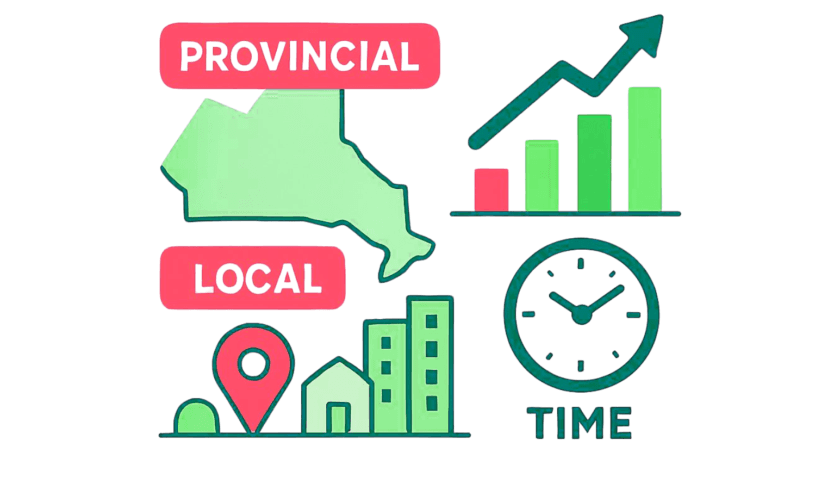
When provincial initiatives intentionally allow local variation like this, performance measurement needs to account for three things:
- A shared provincial outcome layer (e.g., housing stability, engagement in care, system utilization)
- A local priority layer (recognizing differences in governance, service mix, and acuity)
- A time horizon layer (especially when funding and housing supports are time-limited)
And the time horizon matters.
These hubs are already operational. Funding clocks are already ticking. Housing supports are already being used as part of the intervention.
If measurement is treated as something to assess at the end of three years, we miss the opportunity to learn in real time.
Thoughtful performance design isn’t just about accountability at the finish line. It’s about creating feedback loops now so communities, providers, and policymakers can adjust while the model is still evolving.
That feels especially important in this moment.