Who Does What? Roles at Each Level of a Small Nonprofit
Organizational Design Toolkit: Part 5
A few years ago, I reviewed the structure of a women's shelter that had grown in recent years. It had added programs, staff and funding slowly over years, but it was still operating the way it had when it was small. The Executive Director, deeply respected by staff and well known in the community, was still at the centre of the day-to-day decisions.
What the organization needed from her had changed. A larger organization needed an Executive Director focused outward: building partnerships, growing fundraising, and representing the shelter at sector and community tables. That's hard to do when you're also the person everyone turns to for daily decisions.
Everyone we spoke with, from the Board to front-line staff, agreed on what was missing: a role between the Executive Director and the staff, focused on running programs and supporting the team, so the Executive Director could lead.
This isn’t unusual. A 2024 report from the Ontario Nonprofit Network found that Executive Directors are often expected to “hold the workload, expertise, and expectations of the entire organization,” leading to burnout and isolation, with the heaviest burden falling on leaders of small and mid-sized nonprofits. When so much rests on one person, it’s hard for anyone else to step in.
Levels are about the kind of work
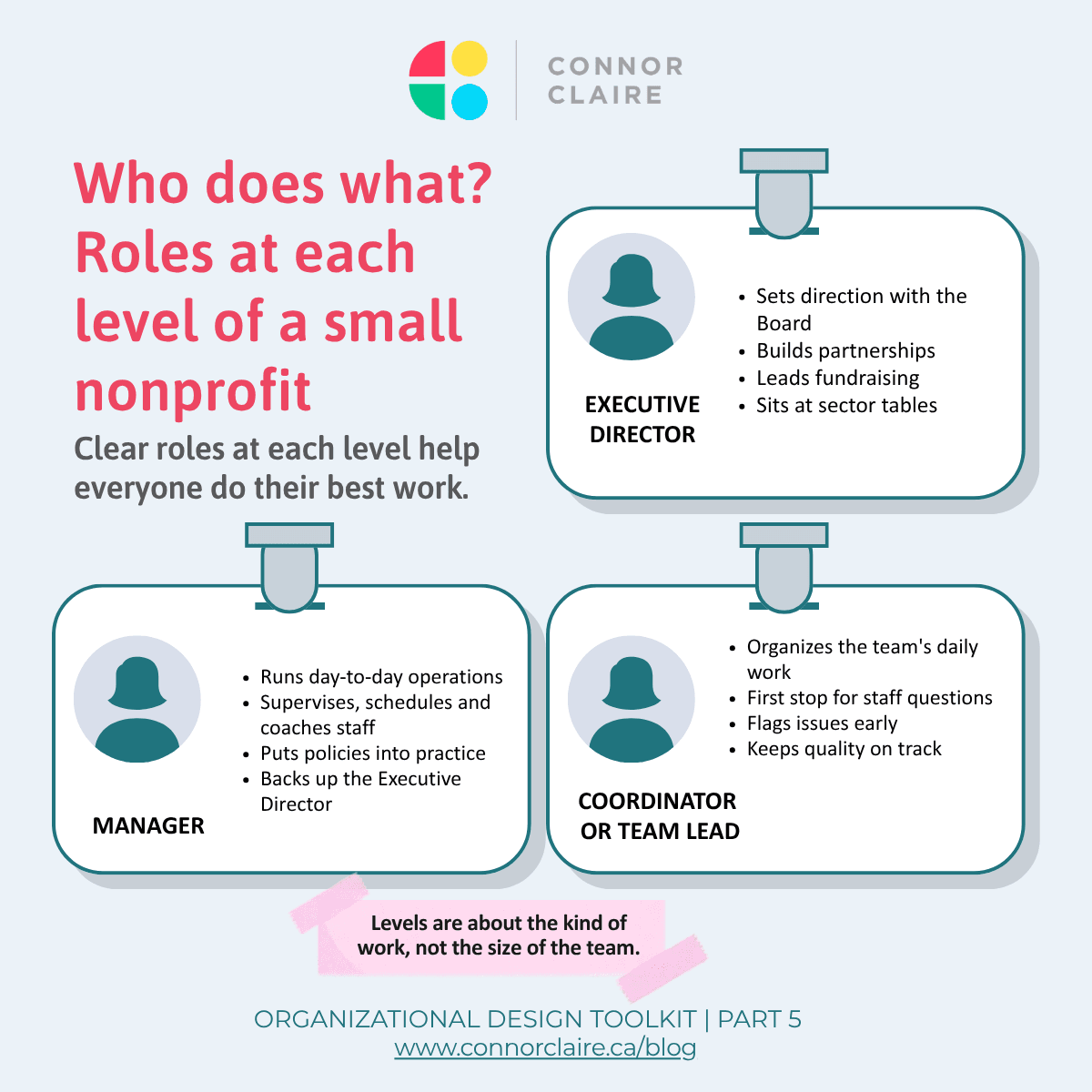
In a small or growing nonprofit, levels aren't about having a big hierarchy. They're about being clear on the kind of work each role is responsible for. When that's clear, people can focus on what only they can do.
In the shelter, we defined it this way:
- The Executive Director would focus outward: building partnerships, leading fundraising, taking part in sector tables, and working with the Board and funders on the organization's direction.
- A new Program Manager would run day-to-day operations: supervising and scheduling staff, coaching, putting policies into practice, health and safety, on-call, and backing up the ED.
- The business role would focus on finance, payroll, HR administration and facilities.
None of this was about adding layers for their own sake. It was about giving each person a role they could actually do well.
Clear roles support everyone
When roles are clear, Executive Directors get time to lead, managers can support their teams, and staff know where to turn. It also makes the organization far less dependent on any one person, which, as Part 2 showed, is what keeps it steady when people leave or programs change.
Next in this series: when to share a function across the organization, and when to keep it local.